
Is the Earth really flat?
Some thoughts on why conspiracy theories become so popular and why "wild takes" are the ones people seem to like the most..

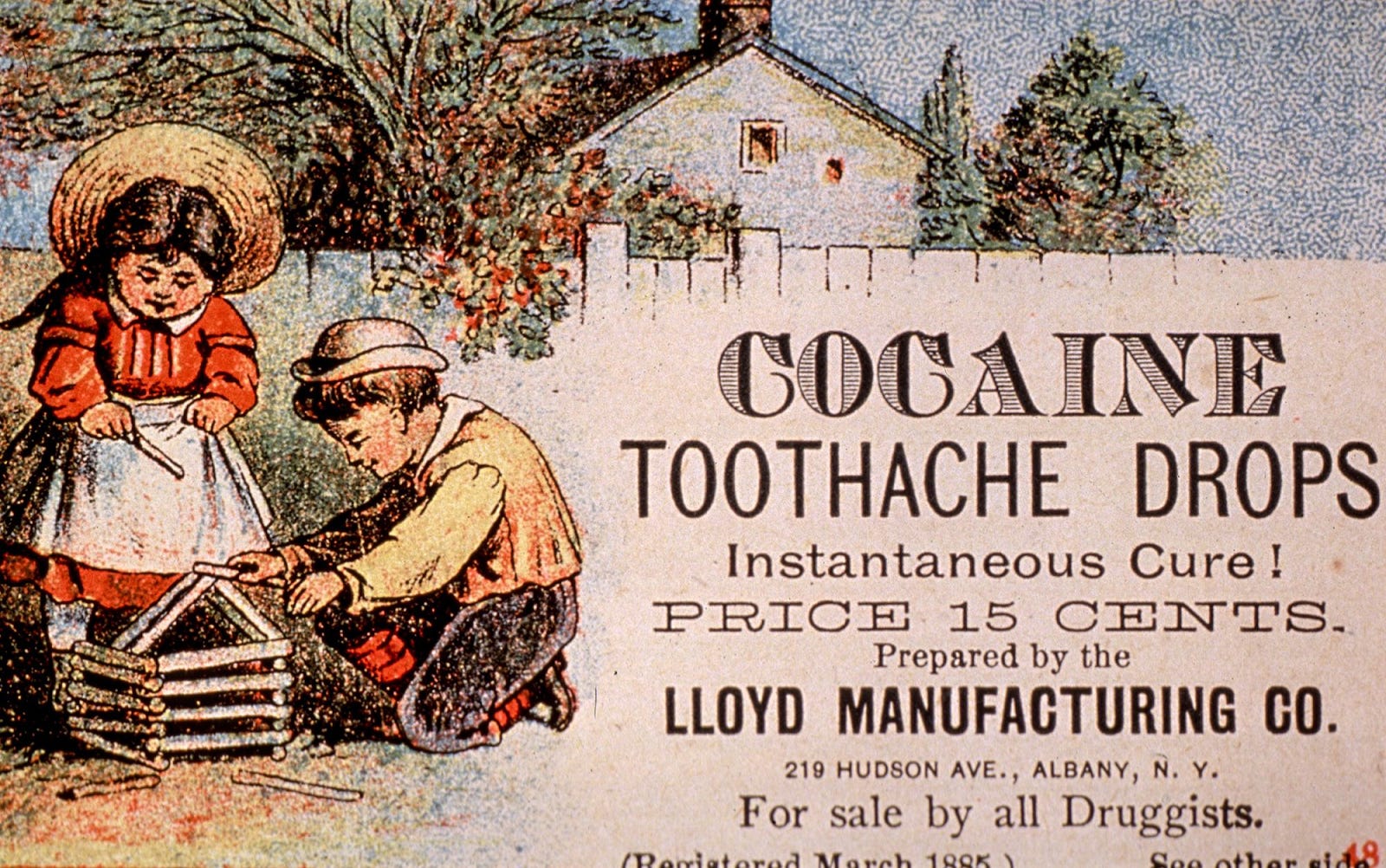
Anecdotally at least, it feels like we live in a world now where conspiracy theories, “wild takes” and mistrust in “experts” is very common?
And with all this, comes the sensation that “truth” (however you define it) is unknowable. Solipsism, perhaps, as philosophers define it, is somewhat wide spread. Drop into any internet comments section, scroll YouTube or watch Question Time on BBC1 and you’ll find plenty of it about.
I’m not quite sure how scientifically we’d measure just how distrustful people are in the powers that be and orthodox thinking – but I’d point to three of anecdotes which at least give me the “feeling” it’s at an all time low.
Firstly, the fact that in 2018 and 2020, Birmingham in the UK (not far from my home) played host to a convention for those who genuinely believe the earth is flat.
Secondly, just have a look at the level of online discourse on social media and comments sections of the internet etc. The number of people turning up with their own “explanation” for events and putting them very forthrightly, in messages or YouTube videos – seems higher than ever.
Thirdly, (and related to the second point) the riots in the UK in 2024, which were sparked by the incorrect naming of a suspect in a murder case online. Some people, deliberately concocted a mistruth/conspiracy theory to try and trick others.
It seemingly worked.
We seem to live in a world where conspiracy, misinformation and mistrust in “truth” are common now.
If I’m right, why is it like this? What has caused it?
I think there are seven key drivers for this. Some of them are due to changes in the world and culture we live in. Others are psychology “loop holes” in our minds which might not seem immediately obvious.
If you’d indulge me, I’d like to try describing them below.
1. Our childhood experience of “hidden knowledge”
As children, we grow used to the idea that there is “hidden knowledge” very quickly. It’s clear to us there's another world that we might not get to know or that we don’t understand.
“Where do babies come from?” is perhaps a basic but good example. Or consider “what is inflation?” or “why do adults get married and divorced?” These are all examples of knowledge/understanding that we don’t yet usually possess as a child, yet we are keenly aware that others do and that we cannot access them.
On top of this, those that are “in the know” (our parents, teachers and adults in general) will sometimes willingly tell us lies, often with the intention of soothing us or to stop curiosity.
Stories like Santa Claus, the tooth fairy or “when your cat died, it went to heaven to live with God” are all things we are often led to believe as a child to make things more comfortable which we find later to not be true. Our heroes sometimes fall from grace via this process.
Santa isn’t real. There is no such thing as magic. Dad is not a super hero. He's just a normal man.
Whatever your individual experience, the truth is that as children, the precedent is usually set strongly and early. We should expect there to be knowledge we don’t have, that others, “who are in the know” do. Many of those people will be in positions of authority. Many will be those who we love and trust. But they don’t give us the full story or may lie to us willingly – even if for benevolent reasons.
We learn early on that we have to “unlock” knowledge by growing and learning. Along the way we will make discoveries about the lies we have been told. Sometimes we’ll need to use trickery or cunning to do so.
This is somewhat a normal part of human life it seems – but I believe this experience in childhood prepares the groundwork later in life perhaps for the feeling that we don’t know everything. That others (benevolent people even) lie and it’s our job to uncover the truth.
2. The hidden hand of customisation
The world around us is more heavily customised and controlled than ever. Sometimes this is very visible to us. For example :-
- Spotify or Netflix remembers what songs and films I like. It presents to me a different list of things to listen/watch than the next person.
- When I browse online shopping, the system remembers what I bought before and what I’m interested in and shows me or emails me a different list of things
- When get into my car, it automatically detects who I am and moves the seat to the right position, switches the aircon to the right temperature and selects my favourite radio station.
But other times, this customisation is hidden or “behind the scenes.” For example :-
- Google shows me a different set of search results for a term/phrase than another person who may search for the same thing. This is based on how it identifies me and what I’ve done in the past with searches. I don’t know this is happening necessarily or understand my search results are being curated – unless I read the very small print in the terms and conditions somewhere.
- My social media feed shows me things that are specifically for me, based on what I have liked or looked at in the past (or, what is going to make me angry).
Whether we see it or not, we get used to the idea that things are going to be tailored or customised for us and that there will likely be a hidden party behind the scenes doing this. Almost everywhere we go in modern life, there is a “magician” behind the scenes. They are watching, tracking and shaping the way things work in the world around us in real time as we go.
We grow used to this feeling. We actually probably don’t think about it consciously most of the time and the concept of it is just “normal.”
3. Scammers and phishing. We are surrounded by tricks and tricksters
According to the financial ombudsman, by September 2024, the UK had reached the highest level ever recorded of online financial scams – 8,700 reported cases in the three months previous.
Online shopping, online banking and electronic payments (and a cost of living crisis) have meant that scamming and defrauding has become more popular with criminals than ever.
The social engineering aspects of this are stronger than ever.
The majority of us know someone who has fallen victim to a scam. Or maybe we’ve experienced it ourselves? An email from the tax office asking for a payment? A phone call from someone pretending to be the bank or the police who wanted the code that was texted to us to log a fraud case? Or the text message from a son/daughter who was in trouble and needed money urgently?
Or perhaps at work, you’ve attended/watched phishing training about scams? Or maybe you have experienced emails or phone calls from people pretending to be your CEO or other management wanting payments, passwords or other actions?
Living in the modern world then means growing used to the fact that there are scammers and scams around every corner trying to trick us. They are often hidden and mean us harm. This means many of us constantly live in a state of hyper-vigilance, on the look out for what is genuine and what is fake.
4. Large Volumes of information/opinion and our inability to deal with it
Between social media and 24/7 rolling news delivered straight to our pockets or wrists, never in human history has your average person been exposed to so much information and opinion.
Everyday, we are deluged with information. Most of it is bad news about things that we cannot do anything about, or, crucially, struggle to comprehend.
We are told, for example, that an under sea internet cable has been cut and that authorities suspect Russian agents were behind it – but that’s all we know. It leaves a vast number of questions in our minds as ordinary people who have no access to the details or a crime scene.
The comments sections, media analysts and social media offer answers to our questions.
But, as has been shown many times in many ways, most of these sources are actually, incredibly unreliable. They are perhaps purely seeking clicks and attention (in the modern world, getting someones attention or interaction on/with your media is worth money), or may even be agents of a foreign government deliberately spreading misinformation.
And so we are left with the sense that there is so much going on, so much to take in, but most of it is incomprehensible or beyond our control.
We can end up feeling quite small and feeling quite alone as a result.
The constant deluge of information and lack of reason and explanation is closely linked to another factor...
5. The human inability to deal with gaps
As I touched on above, the human mind struggles greatly with the ability to understand confusing information. It doesn’t like gaps and tries to bring order to chaos automatically.
An extremely basic example of this might be cloud watching and seeing shapes in the clouds. Or, perhaps a better and much more complex example might be religious beliefs?
The world is so complicated, the universe so massive and mysterious and yet all of it seems purposeless and often times very confusing? On top of this is the fear of death, based on our inability to grasp infinity – another gap and unknown. The human mind struggles with this greatly and so we invent stories and beliefs to explain it.
This is an extremely human and natural thing it seems. Another “brain mechanism” to help us cope psychologically with the matter of existence.
Often times, to fill these gaps, we simply make things up. Or we take what can see so far and try to assemble meaning from it. Putting 2 and 2 together and making 12 – as the cliché might go.
6. Narrative flips and conspiracy theories that turned out to be true
I saw a Tweet once which read “Conspiracy theories might as well be called spoiler alerts at this point.”
It was funny but contains a nugget of truth.
There are more than a few historical examples of conspiracy theories that turned out to be truth - or at least have large amounts of truth in them.
Classic examples from the United States would be the Gulf of Tonkin incident - where the US government lied about an attack on it’s ship near Vietnam in order to justify military action.
Or the Tuskegee experiment, where people with syphilis were deliberately left untreated in order to study it’s effects but were lied too about medical care they were given.
We also have a massive history of “narrative” flips, changes in story, updates to facts or things that, we were told with great confidence would never happen but then did.
I made a list of these recently. They go like this :-
I was told by authority when growing up that men couldn't marry men and women couldn't marry women.
I was told by authority when growing up that there were 9 planets in the solar system (and Pluto was one of them).
I was told by authority when growing up a man was a man and was always a man. I was told a woman was a woman and was always a woman.
I was told by authority when growing up that men and women had clear roles and jobs to do in society. There were jobs for men and jobs for women. That was that.
I was told by authority that smoking was good for your nerves and you should maybe have a couple extra a day if possible if you are anxious. Doctors recommended it.
I was told by authority when growing up it was ok to have a beer before driving the car, as long as you could handle it.
I was told by authority Jimmy Saville was a great guy.
I was told by authority Rolf Harris was a great guy and I should write to him to get his auto graph.
I was told by authority that Saddam Hussain had weapons of mass destruction.
I was told by authority Donald Trump would never win a presidential election.
I was told by authority that marijuana was one of the worst drugs ever that would cause a "living nightmare"
I was told by authority that Brexit would never happen. That it was a fringe movement that would go away.
I was told by authority that Jussie Smollett was the victim of a terrible racist and homophobic attack.
I was told by authority that masks weren't much help with stopping other people catching covid from me and there was no need to wear them.
I was told by authority that I had to stand at least 2 meters apart from other people to stop covid spreading.
I was told by authority that I had to stand at least 1 meter apart from other people to stop covid spreading.
I was told by authority to stay at home because the risk of catching or spreading covid was too great
I was told by authority I'd only need to stay at home for 3 weeks to stop covid.
I was told by authority almost 7 weeks later to go to work because the risk of catching or spreading covid was not great.
I was told by authority to stay at home again because the risk of catching or spreading covid was too great
I was told by authority there would be no changes to rules around numbers of people who could gather together at christmas 2020.
I was told by authority to take two injections with urgency to "flatten the curve"
I was told by authority to take a third injection with urgency to "beat omicron"
Many of these of course, are scientific changes. And science, updates itself - thats the beauty of it. As new evidence becomes available, things change.
The problem is, people are so dogmatic about existing understandings that any change feels difficult? It feels like what was held as “total truth” yesterday, is now ignored today. And this makes it much harder to take seriously the next time “total truth” is updated?
It can also be slowed down by “anti” messages - especially things that affect those making money :-

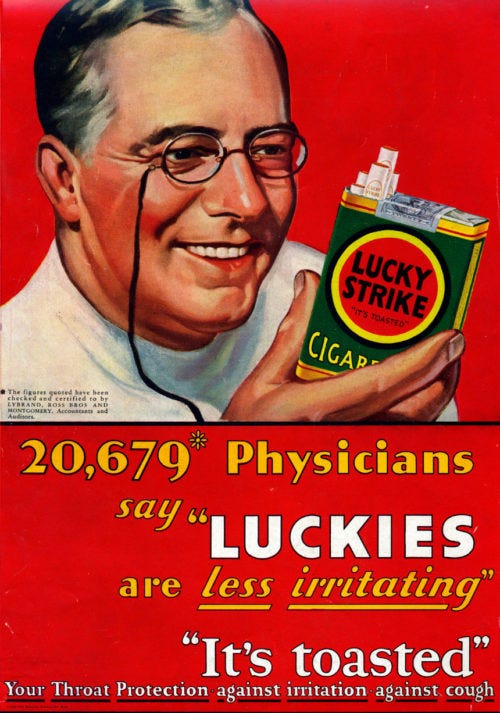
If you are old enough, you’ll remember when 7-up was GOOD for children and cigarettes were recommended by your doctor. There was a time in the UK especially where if you went to talk to your doctor, there was the likelihood he had a cigarette lit as you spoke. I even have a distant memory of my grandmother, being told, when pregnant, that an extra cigarette or two a day, would help “calm her nerves.”
If you had said at the time “cigarettes are really bad for you and increase your risk of cancer” people would have told you that you were a conspiracy theorist, crazy, wrong or deluded.
But the narrative flipped.
People are VERY aware of this, especially after events with Covid. They expect it.They don’t want to be on the wrong side. So often, they may try to pre-empt what the next change/flip is to be.
7. The withdrawal of religion
Closely linked with point 5, it used to be we had religious teachings to fill the gaps in for us. Many people were used to assigning lack of understanding to a higher power or turning to religious text for explanation (or some ways “comfort” that they didn’t understand something).
There was also perhaps a sense that, there would be some justice for things/people we didn’t agree with? “God will punish the things they do.”
But as people became less religious (in the UK certainly) a lot of people lost those outlets. They were used to the idea/feeling that there was a “higher power” directing things - but this being a divine entity in the sky watching over us was no longer current for many people.
And as per point 5, where theres a gap, people will often try and fill it with something else.
Given these points, I don’t think it’s hard to actually understand why conspiracy theories and “wild takes” have become so popular in the last 5-10 years.
We live in times where we are in big tribes with big data and big issues. Where the hidden hand of customisation is at our back and we are surrounded by scammers, con artists. It’s a place where “facts” which are held with dogged determination, can change direction in a heart beat. And being caught out and on the wrong side of an understanding can be punished (see cancel culture- https://en.wikipedia.org/wiki/Cancel_culture)
In response to this environment, people often feel small, alone, frightened and confused. They desperately want to be “ahead of the curve.” To “know the real facts” or to just fill their lack of explanation or understanding with an idea. In other cases to comfort themselves with a story.
To dream and to fill in the blanks with stories, myths and legends is, after all, something that really defines us as human beings to begin with?
How we tackle this, I’m not entirely sure.
But I think it begins with recognising where we are as a society and being aware of it’s effects on us and our thinking.
I think education can help also. If we can teach people to think, re-read and examine/question before they react, this will go a long way.
Unfortunately, this won’t help those who are profiting from “attention farming” of course. But I believe it’s critical we give people at least a fighting chance of being able to spot what might be fake and what the intentions are behind a piece of media rather than just reacting to it on feelings alone.
https://www.ons.gov.uk/peoplepopulationandcommunity/wellbeing/bulletins/trustingovernmentuk/2022
https://www.financial-ombudsman.org.uk/news/fraud-scam-complaints-hit-highest-ever-level
https://www.willpatrick.co.uk/articles/notes-from-a-flat-earth-conference